GI Research Foundation Invests $770K+ to
Accelerate Breakthroughs in Digestive Diseases Care
The GI Research Foundation has announced nearly $800,000 in new research funding through its Annual Grant Cycle and Regenerative Medicine for Digestive Diseases (RMDD) Grant Program. This investment advances early-stage research with the potential to drive life-changing breakthroughs.
2026 Annual Grant Cycle
The 2026 Annual Grant Cycle awarded six grants supporting research to better diagnose, prevent, and treat inflammatory bowel disease (IBD) and related digestive diseases.
Patient Care: IBD & Mental Health
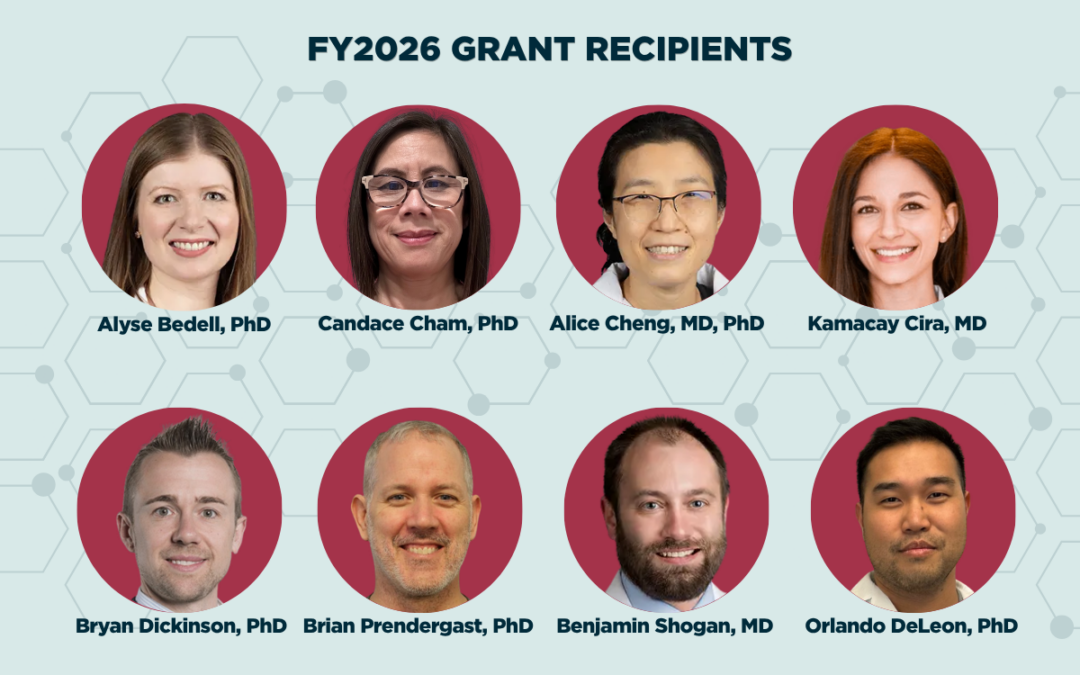
- Alyse Bedell, PhD | Piloting A Group-Based, Transdiagnostic Psychotherapy to Treat Depression and Anxiety in IBD | $39,238 | Depression and anxiety are common in people with IBD, yet many lack access to effective care. This study evaluates a 10-session virtual group program designed to bring evidence-based therapy into the home. Researchers will assess whether the program can reduce depression and anxiety while improving disease activity and overall well-being.
- Brian Prendergast, PhD | Seasonal Regulation of Gut–Brain Interactions in Inflammatory Bowel Disease | $100,000 | People living with IBD often experience anxiety and depression alongside GI symptoms, and many report that these symptoms worsen at certain times of year. This research explores whether seasonal changes in diet and the gut microbiome create predictable periods of increased vulnerability in IBD. Findings could help explain seasonal symptom patterns, guide better diet and microbiome-focused strategies, and lay the foundation for future approaches to improve care.
Diagnostics
- Candace Cham, PhD | Mining the Small Intestinal Microbiome for Developing New Therapies against GI Diseases | $46,000 | The small intestine has a unique environment and microbiome, yet it remains understudied due to limited access and challenges collecting samples. This research will evaluate an ingestible capsule designed to collect microbiome samples directly from the small intestine. The goal is to better understand healthy small intestinal microbes and metabolites, creating a foundation for future microbiome-based therapies for small intestinal diseases.
- Bryan Dickinson, PhD | Development of Improved Calpro Detection Assays for Understanding and Monitoring IBD | $100,000 | For people with IBD, it can be difficult to tell when disease is truly active. This research aims to develop a more precise stool test that distinguishes different forms of calprotectin to better detect inflammation, track treatment response, and identify flares earlier.
Treatment & Prevention
- Alice Cheng, MD, PhD | Repurposing the Microbiome: Engineering Gut Microbes to Modulate Bile Acids, IBD, and PSC | $84,950 | Bile acids are liver-made compounds that help digest fats and regulate inflammation, yet their role in IBD and primary sclerosing cholangitis (PSC) is unclear. This study uses a model human gut microbiome to examine how specific bile acids and microbes influence disease and whether targeting these pathways can improve outcomes and inform new microbiome-based therapies.
- Kamacay Cira, MD | Regional Microbial EcoSystem Mismatch-Induced Epithelial Identity Loss Drives Inflammation and Postoperative Disease Recurrence (RESOLVE) in IBD | $100,000 | For nearly 8 in 10 people with severe ulcerative colitis, surgery meant to cure the disease instead leads to pouchitis—chronic inflammation that causes urgency and discomfort. This study tests whether a “microbial mismatch” between the pouch and gut bacteria drives the condition, with the goal of preventing pouchitis before it begins.
Regenerative Medicine for Digestive Diseases
The GI Research Foundation has partnered with UChicago Medicine to launch a new funding initiative for Regenerative Medicine for Digestive Diseases (RMDD) to advance research focused on repairing damaged digestive tissues and improving patient outcomes.
- Benjamin Shogan, MD, and Orlando DeLeon, PhD | Promoting Intestinal Healing Through Dietary Manipulation of the Microbiome | $300,000 | Hundreds of thousands of people undergo colorectal surgery each year, yet healing complications remain common and can be life-threatening. This research explores how diet-driven changes in the gut microbiome may interfere with normal intestinal healing after surgery. This study will test whether targeted dietary strategies can improve recovery and reduce complications.